Matching Floor Geometry to Material Flow
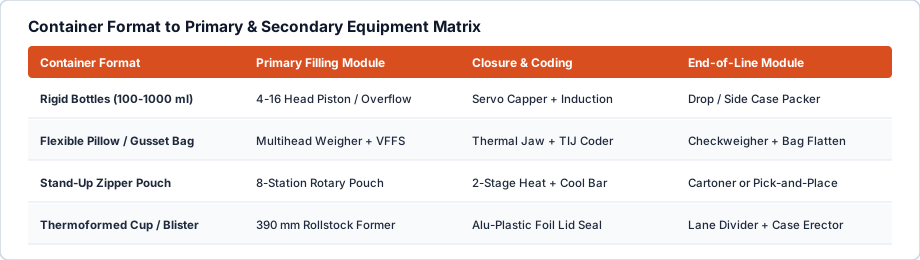
Floor geometry determines how raw empty containers, packaging film reels, Corrugated RSC blanks, and finished pallets move without forklift cross-traffic. A straight 18–28 meter spine minimizes conveyor turns for high-speed glass bottling, whereas U-shape cells allow a single operator team to supervise both primary unscrambling and end-of-line palletizing.
Compare sector-specific setups in industry packaging lines and run throughput calculations in packaging line sizing.
Comparison of Industrial Line Topologies
Choose the floor layout based on building column spacing, washdown zoning, and staffing:
| Layout Geometry | Typical Footprint | Best Application Fit | Operator Staffing | Engineering Trade-Off |
|---|---|---|---|---|
| Straight Linear Spine | 16–30 m × 2.5 m | 6,000–12,000 BPH beverage & chemical lines | 2–3 operators across zones | Zero 90° curve friction; requires long bay |
| L-Shape Wall-Hugging | 12 m × 10 m corner | Cleanroom primary fill + outer room case pack | 2 operators | Separates wet hygienic zone from corrugated dust |
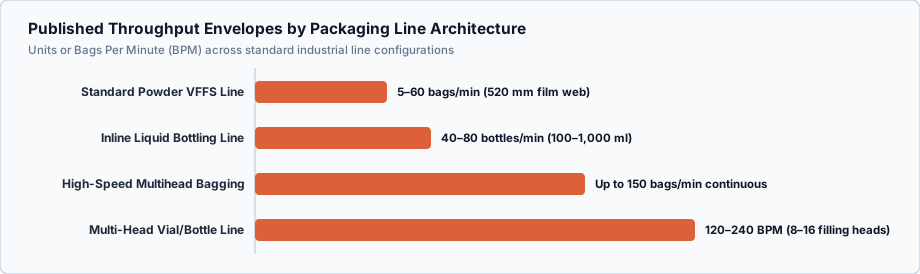
| U-Shape Cellular Loop | 10–14 m × 6 m | 40–80 BPM bottling or pouch-to-carton lines | 1–2 shared operators | Infeed & pallet exit share one forklift aisle |
| Vertical Mezzanine Stack | 6 m × 5 m × 4.2 m H | Multihead weigher + VFFS or jar filling | 1–2 operators | Gravity drop eliminates horizontal transfer loss |
Pair layout selection with our turnkey packaging line engineering and automatic packaging line manufacturer checklists.
Critical Line Integration Checks
- Clean/Dry Zone Partitioning: Pass sealed bottles or pouches through a small wall aperture so corrugated carton dust and wooden pallets stay outside primary food/pharma rooms.
- Robotic End-of-Line Envelope: Allow a guarded 3.5 × 3.5 m cell when deploying 315 kg payload palletizing robots with >3,100 mm reach across dual pallet stations.
- Service & Reel Clearance: Maintain 800–1,000 mm rear access for control cabinets and roll-film hoists (520 mm web reels up to 40 kg).
Commissioning & Line Balancing Checks
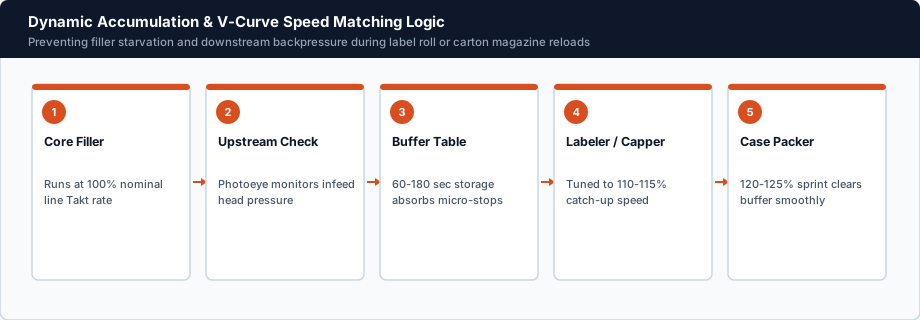
Verify upstream/downstream photoeye placement so a paused case sealer decelerates the labeler smoothly rather than hard-stopping containers mid-application.
Share your building bay dimensions on the Project Brief page for a zoned layout check, or return to automatic packaging lines.
Explore related specifications in Automatic Packaging Lines, Line Configurations & Specs, and submit your container throughput targets via Project Brief.